Emergency Water Damage Restoration in Portland Starts Before Help Arrives
Water off, power safe, belongings out of the way. These steps protect your home in the first hour.
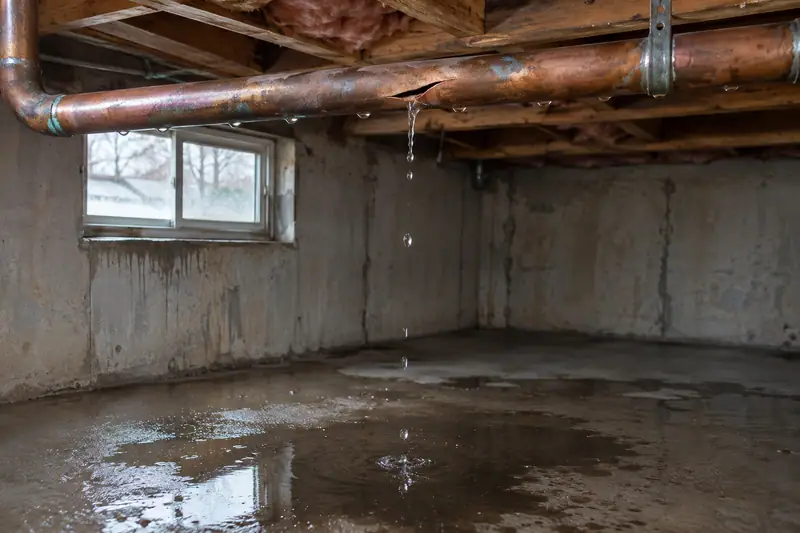
Step one, stop the water
Emergency water damage restoration in Portland always starts with the same move. Stop more water from coming in. Everything else, from drying to repairs, depends on it.
Find the main shutoff
Look where the water line enters the house. In many homes that is the basement, the crawl space access, the garage or a closet on an outside wall.
Close it
A round handle turns clockwise until it stops. A lever turns a quarter turn so it sits across the pipe.
Use a fixture valve if the leak is small
Toilets, sinks, washers and dishwashers have their own small valves. Closing one lets the rest of the house keep water.
Use the meter shutoff if the main will not turn
The meter box near the street has a valve that closes with a meter key. Do not force a stuck main valve with a long lever, as old valves can break.
Drain the lines
Open the lowest faucet in the house to let the pressure and the remaining water out.
If the water is coming in from outside during a storm, you cannot turn it off at a valve. Clear the overflowing gutter or downspout if it is safe, put towels at the door and move what you can upstairs. The storm and flood damage page has more on outside water.
If you have never looked for your main shutoff, take a minute to find it once this is over. Tie a tag to it, make sure everyone in the house knows where it is, and check that it turns. In an emergency, knowing where to go saves the first few minutes, and those are the minutes when most of the water comes in.
Step two, make the power safe
In any emergency water damage restoration in Portland, safety comes before drying. Water and electricity together are the biggest danger in a flooded room. Do this before you walk into the water.
- If you can reach the electrical panel from a dry place, turn off the breakers for the wet rooms.
- If the panel is in the wet area or you would have to stand in water, leave it alone and keep out of the room.
- Unplug small appliances only if you are standing somewhere dry and your hands are dry.
- If water came through a light fixture, turn its breaker off and do not touch the switch.
- If you smell gas, leave the house and call the gas company from outside.
Nothing in the room is worth a shock. If there is any doubt about the power, wait outside the room and let a professional check it.
Step three, protect your belongings
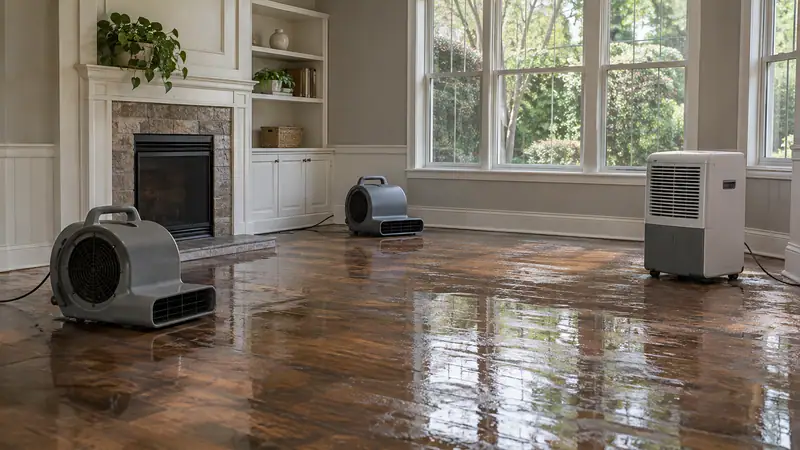
Once the water is off and the power is safe, move what you can out of the water. Small moves now save a lot later.
- Lift rugs off wet floors and hang them somewhere they can drain.
- Put foil or plastic under the legs of furniture that has to stay in the room, so the wood and the stain do not bleed into the carpet.
- Take books, papers, photos and electronics to a dry room.
- Pin up curtains and skirts on sofas so they are not wicking water.
- Empty lower cabinets and drawers that sit on wet floors.
- Take valuables and medicines out of the area.
If the water reached a closet or a storage room, open boxes and pull out anything made of paper or fabric first, as those soak up water fastest. Wet photos can be laid face up on a towel to dry, and important papers can go into a freezer bag in the freezer until you have time to deal with them. Leave heavy furniture where it is if moving it means dragging it through the water, and simply lift it onto blocks or foil.
Step four, record everything
Before you clean up, take photos and short videos. They help with any insurance conversation and they remind you later what the room looked like.
- The source, such as the broken pipe, the leaking appliance or the place where water came in.
- Each wet room from the doorway, then closer views of floors, walls and ceilings.
- Damaged belongings, with a simple list of what they are.
- The water level on walls, if there was standing water.
- The date and time you found the water and each step you took.
Keep damaged items until your insurance company says they can go, unless they are a health risk, as with food or anything soaked in sewage. Our page on insurance and water damage has more on the paperwork.
Step five, remove water you can safely reach
With clean water, a wet vacuum, mops and towels can take a lot off hard floors while you wait. Every bucket you remove is water that does not soak into the walls.
Stop if the water is from a toilet, a drain or outside, if it has a smell or if it has been sitting for more than a day. That water can carry bacteria, and it should be handled with gloves, boots and proper equipment. Read clean, gray and black water explained if you are not sure which you have.
If the water came from a toilet, a drain or outside
Water that came up a drain, overflowed from a toilet or ran in from outside is treated as contaminated. The first steps change a little.
- Stop using every sink, toilet, shower and appliance that drains, because a blocked line sends more water back up.
- Keep children, pets and anyone who is unwell well away from the area.
- Do not try to mop or vacuum it. Close the door to the room if you can.
- Wash your hands thoroughly after being near it, and change shoes before walking into clean rooms.
- Leave porous items such as rugs and cushions where they are for now, and photograph them.
The sewage backup cleanup page explains what the cleanup involves once help arrives.
If water is coming through the ceiling
Water overhead adds two risks, electricity in the light fixtures and the weight of a soaked ceiling. Turn off the breaker for that room first. Move furniture and electronics out from under the wet area and keep everyone out of the room.
If the ceiling is bulging, put a bucket under the lowest point and make a small hole there with a screwdriver, standing to one side. The water drains into the bucket instead of bringing a section of drywall down. If water is coming through a light fixture, leave it alone and keep the breaker off. Then find the source above, often a bathroom, a washer or a roof leak during rain, and shut off the water to it.
What not to do
- Do not use a household vacuum on water. It is not built for it and it is an electrical risk.
- Do not turn on ceiling fans or lights in a room with a wet ceiling.
- Do not lift wall to wall carpet yourself, as you can damage it and the tack strip.
- Do not run the heat or air conditioning if the ducts or the furnace got wet.
- Do not paint, caulk or cover anything that got wet until it has been measured as dry.
- Do not wait for a stain to grow before asking for help.
When someone arrives
Emergency water damage restoration in Portland goes faster when the technician has the facts. When they arrive, show them the source, the rooms you know are wet and any photos you took. Mention anything you did, such as shutting a valve or moving furniture, and how long the water was there. They will measure the moisture and walk you through what the numbers mean, and nothing starts until you agree.
Ask them to show you the readings. Seeing the difference between a wet wall and a dry one makes the drying plan easier to follow. The page on how long water damage takes to dry explains what to expect over the next few days.
Have a few things ready to make the visit smoother. A clear path to the wet rooms, the location of the main shutoff and the electrical panel, and your photos and notes all help. If you have already spoken to your insurance company, have the claim details to hand, since the technician can make sure the records they take match what the adjuster needs.
Emergency water damage restoration checklist for Portland homes
| Do this | Why |
|---|---|
| Close the main water valve | Stops more water coming in. |
| Turn off power to wet rooms from a dry spot | Prevents shocks and damage to wiring. |
| Keep children and pets out | Protects them from the water and the hazards in it. |
| Move belongings and lift rugs | Saves things from soaking and staining. |
| Photograph everything | Creates a record for insurance and repairs. |
| Remove clean water you can reach | Limits how much soaks into floors and walls. |
| Call for help with the drying | Hidden water needs meters and equipment to find and dry. |
First hour questions
Where is my main water shutoff?
Usually where the water line enters the house, in the basement, crawl space, garage or a closet on an outside wall. The meter box near the street has another valve.
What if the shutoff valve is stuck?
Do not force it with a long lever, as an old valve can snap. Use the meter shutoff near the street, or a fixture valve if the leak is at one fixture.
Should I turn off the electricity to the whole house?
Only if you can reach the panel safely from a dry spot. Turning off just the breakers for the wet rooms is often enough.
Can I start drying with fans?
Fans help with surface water once the standing water is gone. They do not dry walls and floors from the inside, so measuring is still needed.
Is it safe to stay in the house?
With clean water and the power safe, usually yes. With sewage or flood water, keep everyone away from the affected area.
Should I call my insurance company now?
Many people do it the same day. Take photos first and keep notes of what you did.
What if the water is coming through the ceiling?
Turn off the power to that room, keep people out from under it and put a bucket below the drip. A bulging ceiling can be drained with a small hole at the lowest point.
Can I throw away wet carpet myself?
Wait until someone has looked at it and until your insurance company has seen it, unless it is soaked with sewage.
How much water is too much to handle myself?
Anything that soaked carpet, ran into walls, came through a ceiling or came from a drain or outside is worth having measured and dried properly.
What should I tell the technician?
Where the water came from, how long it ran, which rooms it reached and what you have done since. Photos help.